Os nossos artigos temáticos

Cognac vs. Armagnac — Same Grapes, Different Souls

Cognac vs. Armagnac — Same Grapes, Different Souls

Cognac gets the spotlight. Armagnac keeps the soul.

Both are iconic French brandies — but the comparison stops there. If Cognac is the nowadays polished aristocrat born into global fame, Armagnac is the Gascon poet with muddy boots and roots sunk deep into the land. Still, beyond the major houses, Cognac remains a landscape of family-owned domaines and centuries-old savoir-faire.


1) Armagnac: The Gutsy Gascon Spirit


Origin & Terroirs

Long before Cognac conquered the world stage, Armagnac was already flowing in the heart of Gascony. Officially mentioned in a 1310 manuscript by Maître Vital Dufour, who praised its 40 medicinal virtues, Armagnac is France’s oldest recorded eau-de-vie.

Still today, Armagnac is deeply artisanal, produced by small growers and family-run estates who value craft over scale. It is protected by an AOC (Appellation d’Origine Contrôlée) status since 1936, which guarantees origin, traditional methods, and strict production guidelines.


Armagnac hails from Gascony, covering Gers (32), Landes (40), and Lot-et-Garonne (47). The AOC is divided into three official terroirs:


  • Bas-Armagnac – sandy soils, finesse, and fruit
  • Ténarèze – clay-limestone, known for power and structure
  • Haut-Armagnac – chalky, rare, scattered vineyards


Grapes & Distillation

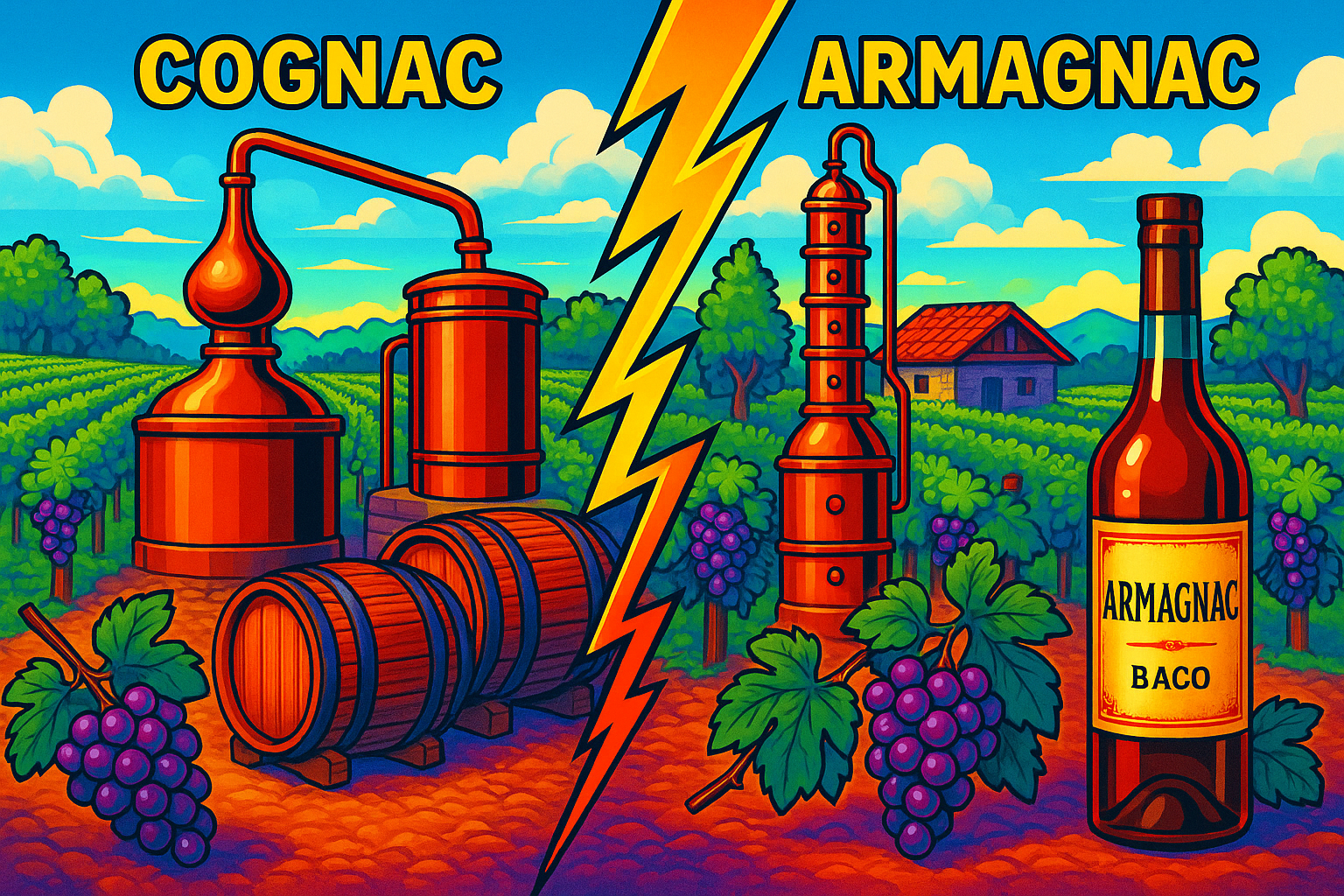
Ten authorized grapes, with Ugni Blanc, Baco 22A, Folle Blanche, and Colombard most common. Armagnac is distilled once using a continuous column still (alambic armagnaçais), retaining more congeners and giving a fuller, earthier profile.


ABV Regulations

For Armagnac, distillation must occur between 52% and 72.4% ABV, depending on the desired style and the still used. Once distilled, the spirit is typically reduced and casked at a strength between 52% and 62% ABV. Before bottling, it is brought down to a minimum legal strength of 40% ABV, as required by French and EU regulations.


Distillation Season – La Flamme de l’Armagnac

Running from October to January 31st, the distillation period is not only regulated but also celebrated. Known as La Flamme de l’Armagnac, this season features public tastings, rural feasts, and the unmistakable scent of brandy flowing through copper stills.


Aging & Compte d’Âge

Armagnac is aged in Gascon oak, yielding a spicy, bold character. It uses a similar age classification system:


  • VS: 1Y minimum
  • VSOP: 4Y
  • XO / Hors d’âge: 10Y+
  • Vintage bottlings: common and highly valued


Mixology & Culture

While often overlooked in classic cocktail books, Armagnac is a bartender's secret weapon — rich, soulful, and deeply complex. It's ideal for Old Fashioneds, Sours, or neat sipping. Though exports are modest (approx. 1.6 million bottles in 2018, with 58% going abroad), interest is growing in the U.S., China, Russia, and the UK, especially in craft and natural spirits circles.


Floc de Gascogne

Armagnac’s fortified wine cousin, Floc de Gascogne, is a mistelle made by blending grape must with young Armagnac. Often enjoyed as an aperitif, it is light, floral, and protected by its own AOC since 1990.


2) Cognac: The Refined Spirit of Charente


Cognac is more than a luxury spirit — it’s a symbol of French diplomacy, legacy, and craftsmanship.

Its roots stretch back to the 16th–17th centuries, when Dutch and English merchants encouraged Charentais winemakers to distill their wines for preservation. This practical export solution evolved into a refined art.

Napoleon Bonaparte had a known appreciation for Cognac and is said to have had barrels sent with him into exile — cementing the spirit's symbolic link to French imperial identity.

Cognac may be the more famous sibling, but its success is no accident. It is built on centuries of refinement, branding, and global positioning — with AOC status since 1936 and a strong governing body, the BNIC (Bureau National Interprofessionnel du Cognac).

Cognac is revered for its elegance, consistency, and global export strength — it is France’s largest spirits export by value.


Origin & Crus

Produced in Charente (16), Charente-Maritime (17), and parts of Dordogne (24) and Deux-Sèvres (79). The AOC defines six + one crus. Soils are chalky and limestone-rich, similar to Champagne, which gives the spirit its hallmark finesse and floral clarity:


  • Grande Champagne: Known for producing eaux-de-vie with exceptional aging potential and floral notes
  • Petite Champagne: Offers similar qualities to Grande Champagne
  • Borderies: The smallest cru, known for its nutty and violet aromas
  • Fins Bois: Produces round and supple eaux-de-vie that age relatively quickly
  • Bons Bois and Bois Ordinaires: Yield more rustic and fast-aging spirits, often used in blends
  • Fine Champagne – blend of Grande & Petite, with at least 51% Grande Champagne


Grapes

The primary grape used in Cognac production is Ugni Blanc, also known as Trebbiano Toscano, prized for its high acidity and low sugar content, which are ideal for distillation. Other permitted varieties include Folle Blanche, Colombard, Montils, Sémillon, and Folignan, each contributing unique aromatic profiles to the final spirit


Distillation Process

Cognac undergoes a double distillation process in traditional copper pot stills, known as "alambic charentais." The first distillation yields a liquid called "brouillis," which is then distilled a second time to produce the "bonne chauffe," resulting in a clear eau-de-vie with a maximum alcohol content of 72.4% ABV.


ABV Regulations

For Cognac, distillation is allowed up to a maximum of 72.4% ABV, which ensures the preservation of delicate aromatic compounds. The eaux-de-vie are generally casked at strengths ranging from 60% to 72% ABV, depending on the house's practice and barrel type. As with Armagnac, Cognac must be bottled at no less than 40% ABV.


Distillation Season – Campagne de Distillation

From November 1 to March 31, tightly regulated by the BNIC (Bureau National Interprofessionnel du Cognac) to maintain standards across vintages and houses.


Aging & Compte d’Âge

Aged in Limousin or Tronçais oak, Cognac follows a structured, transparent system:


  • VS: 2Y (Compte 2)
  • 3Y: Cuvée Supérieure, Qualité Supérieure
  • VSOP: 4Y (Compte 4)
  • 5Y: Vieille Réserve, Réserve Rare, Réserve Royale
  • 6Y: Napoléon, Très Vieille Réserve, Très Vieux, Excellence, Héritage, Suprême (unofficial but widespread)
  • XO: 10Y (Compte 10)
  • XXO: 14Y (Compte 14)


Mixology & Cultural Identity

Cognac is a cornerstone of French luxury and a global cocktail icon. Bartenders value its depth in classics and new creations alike. In the United States, Cognac became a cornerstone of early American mixology. From the Sazerac and Brandy Crusta to the Sidecar, it left an indelible mark on bar culture that continues today.


Angel’s Share, Dame-Jeanne & Paradis

As it ages, these spirits lose up to 2-3% per year to evaporation — the “part des anges”.

Over time, evaporation perfumes the air and leaves blackened walls from natural microbial activity (baudoinia fungus) on cellar walls.


Storage Tradition – Dame-Jeanne

For especially rare spirits, producers may withdrawn from barrels and store to dame-jeannes (large glass demijohns) to stop aging and preserve its peak character.


The Paradis (term mostly used in Cognac) is where houses age their oldest eaux-de-vie — often for decades — in calm, humid cellars in Dame-Jeanne. Hence the reference to what’s the best.


Economic Significance

Cognac is a major contributor to France's export economy, with significant markets in the United States, China, and the United Kingdom. The industry supports thousands of jobs and encompasses numerous Cognac houses and winegrowers .


Pineau des Charentes

Like Floc de Gascogne, Pineau des Charentes is a fortified wine (mistelle) made by blending grape must with fresh Cognac eau-de-vie. It was born allegedly by accident, and now stands as an AOC-protected regional treasure enjoyed as an aperitif or in cocktails.


3) The Mystery of Rancio: Time’s Signature in the Cellar


One of the most prized and elusive notes in long-aged Cognac and Armagnac is rancio — a term that doesn’t translate easily, but every seasoned taster knows when they taste it.

Rancio refers to a complex, oxidative aroma and flavor that develops after long barrel aging, typically 15 to 20+ years. It is not a flaw, but a desirable evolution — often described with notes of dried fruit, walnut, mushroom, forest floor, old wood, leather, and even umami.

This character emerges from a delicate combination of:


  • Oxidative reactions in old, semi-porous oak barrels
  • Maillard reactions during long maturation
  • The interaction between spirit, wood, and humid cellar conditions (chais humides)


Rancio is a sign not just of age, but of patience and respect for time. It’s what separates a merely old spirit from a truly transcendent one.


4) Dedicated Festival and show


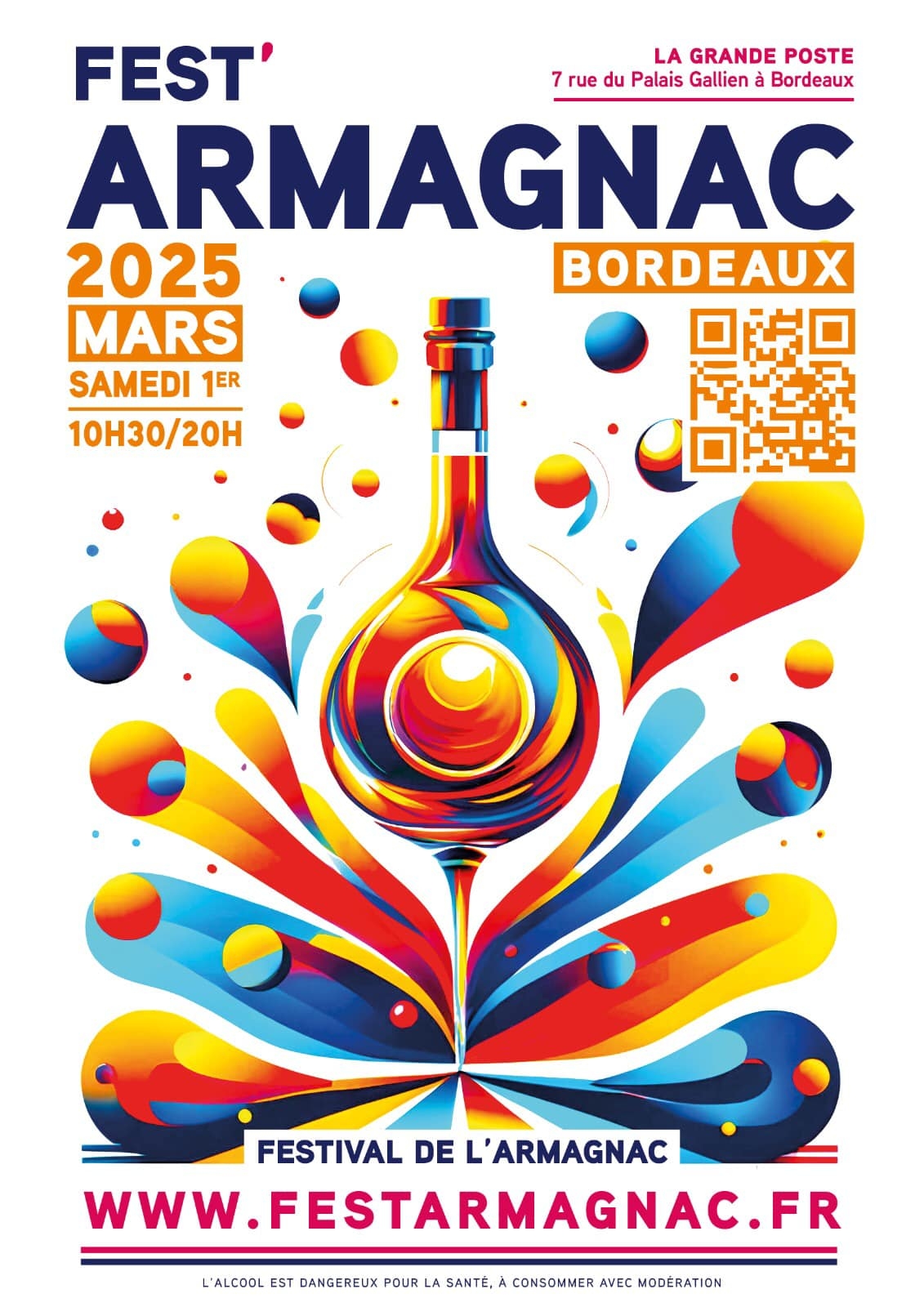
Fest’Armagnac is France’s premier festival dedicated exclusively to Armagnac. Held annually at La Grande Poste in Bordeaux, the 2026 edition will take place on March 7th. The event offers a comprehensive experience with masterclasses on topics like food pairings, Armagnac history, cocktail creation, and cask-strength bottlings. Attendees can also enjoy Gascon cuisine, participate in a tombola, and purchase rare bottles, including exclusive festival editions. https://festarmagnac.fr/


For the first time ever in France, Cognac takes center stage with its very own dedicated festival. The inaugural Cognac Festival will take place on Saturday, November 15, 2025, at the emblematic La Grande Poste in Bordeaux — marking a major moment in the history of this legendary spirit.

This landmark event will unite 36 exhibitors, from iconic houses to indie bottlers and craft distilleries, offering an unprecedented tasting journey through over 200 Cognacs. The day-long experience will feature masterclasses, a mixology workshop, curated food and cocktail pairings, and a boutique for exclusive bottle purchases www.cognacfestival.fr


5) Side-by-Side Comparison Table


Feature                      Armagnac                                                      Cognac

Region                       Gers, Landes, Lot-et-Garonne                    Charente, Charente-Maritime, Dordogne,Deux-Sèvres

Terroirs / Crus          3                                                                      6 + 1

Main Soil Types      Sand, clay, silt                                                Limestone, chalk

Main Grapes           Ugni Blanc, Baco, Colombard,                  Ugni Blanc (main), Folle Blanche,

                                 Folle Blanche                                             Colombard, Montils, Sémillon, others

Distillation Method Single distillation in continuous column still  Double distillation in copper pot still (alambic charentais à repasse)

                                     (alambic armagnaçais)                                   

Distillation Season October–January                                          November–March

                                    (La Flamme de l’Armagnac)                        (Campagne de distillation)  

Distillation ABV      Min 52% / Max 72.4%                                  Min 67.5% / Max 72.4%

Casking ABV            52%–62%                                                        60%–72% (legal min 63%)

Bottling ABV            ≥40%                                                                ≥40%

Aging Classifications VS 1Y, VSOP 4Y, XO 10Y                             VS 2Y, VSOP 4Y, XO/XXO 10Y+, Extra

Paradis / Dame-Jeanne Rare / Yes                                               Yes / Yes

Regulatory Body    BNIA                                                                BNIC

AOC Status               Yes (since 1936)                                          Yes (since 1936)

Jobs Supported        Approx. 2,000                                                 Approx. 60,000

Annual Production ~6 million bottles                                           ~165 million bottles

Exports                      ~1.6 million bottles/Y (58% of total)         €3.9 billion/Y

Cultural Ties             Deep Gascon traditions, rural identity      Napoleon, US cocktail history, luxury

Festival                       Fest’Armagnac                                                 Cognac Festival

Mixology Presence Growing — niche, premium craft cocktails   Strong — classic and modern cocktails

Mistelle (Fortified)  Floc de Gascogne (AOC)                          Pineau des Charentes (AOC)


🌟 Why It Matters


Cognac may rule the global stage, but Armagnac whispers with depth — its legacy distilled in copper stills and Gascon soil.

Where one has become the symbol of luxury, the other remains a treasure of tradition, waiting for those curious enough to taste its story.

At TEP, we don’t just celebrate spirits — we chase meaning, terroir, and soul.

And whether it’s a single-estate Cognac or a wild-vintage Armagnac, we always lean toward what’s bold, rooted, and unapologetically alive.


Dive Deeper – Learn More & Explore


  • 📘 BNIC – Bureau National Interprofessionnel du Cognac: The official authority for all things Cognac — regulations, terroirs, events, and news.
  • 📘 BNIA – Bureau National Interprofessionnel de l’Armagnac: Discover the world of Armagnac, from history to distillation and producer stories.
  • 🎉 La Fête du Cognac: A summer celebration of Cognac, music, and local gastronomy held in the town of Cognac.
  • 🔥 La Flamme de l’Armagnac: A fiery, festive distillation season across Gascony — tradition, alambics, and terroir in full swing.
  • 🎭 Festival Armagnac en Fête (Labastide-d’Armagnac): The heart of Armagnac beats here every autumn — tastings, workshops, and culture.

Publicado em :

Modificado em :
#Eau de vie

#Cognac

#Armagnac

#Brandy

Chartreuse VEP Verte 1000ml, Market Insight And Price Evolution 2019-2024

Chartreuse VEP Verte 1000ml, Market Insight And Price Evolution 2019-2024

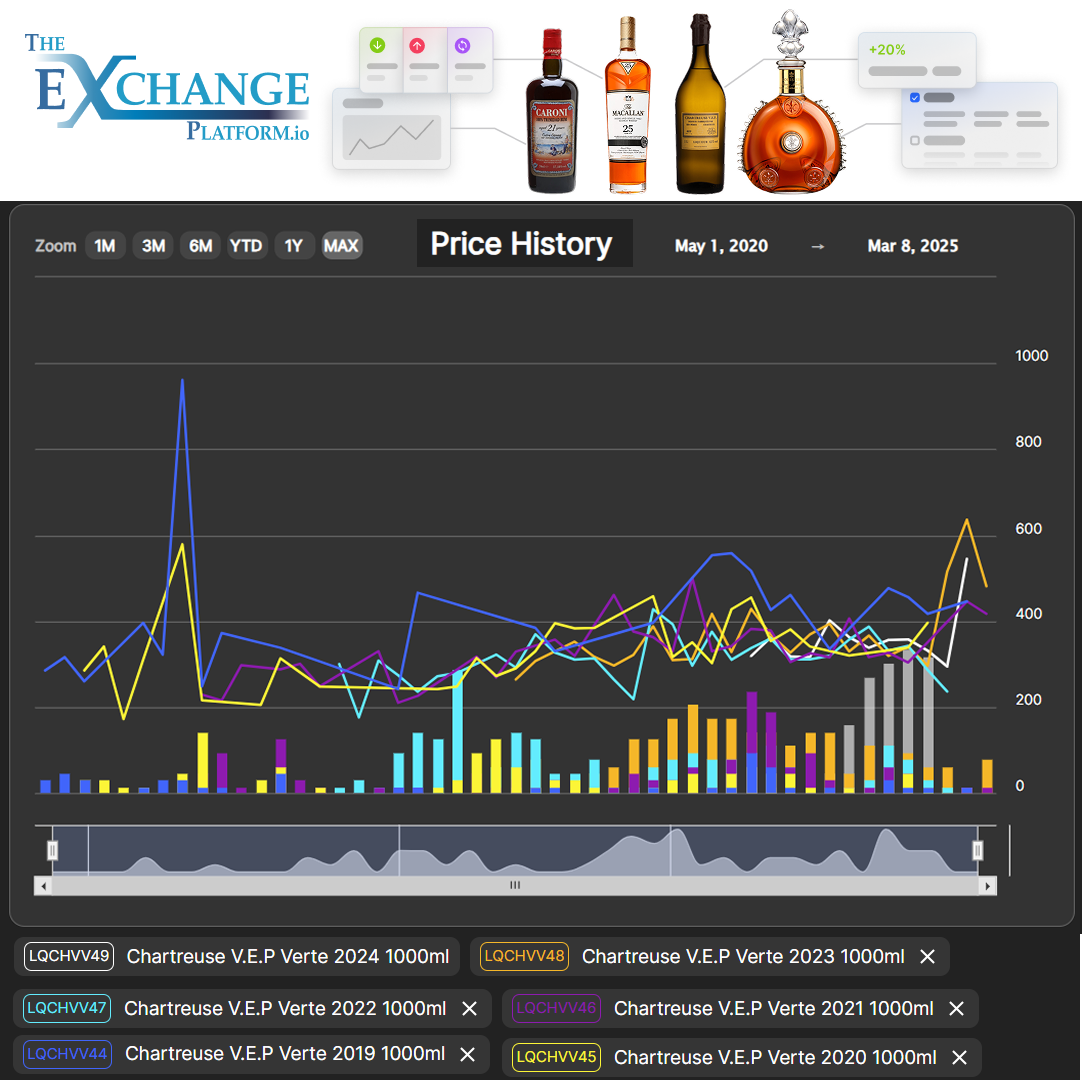
Overview: Chartreuse V.E.P. Verte 1000ml has seen notable price movements over the past few years. While each vintage carries unique characteristics, recent trends suggest that broader market forces and production decisions are playing an even larger role in shaping value. Here's what the data and context tells us.


Vintage Trends at a Glance


2019–2021: Steady growth, low volatility, average price range: €400–€450. Considered "core" vintages for collectors seeking stable value

2022–2023: Strong upward movement, 2022 saw a speculative spike, now corrected & 2023 continues to climb, with high demand

2024: Newest release already priced expensive, suggests a maturing collector base that anticipates scarcity


Why the Shift? Real-World Context That Changed the Game:


1) The Monks' Decision to Limit Production

-In January 2021, the Carthusian monks decided to intentionally limit the production of Chartreuse to focus on their spiritual life and sustainability

-This decision wasn’t made widely public until early 2023, when a letter was shared among industry partners and began circulating online

“The monks are not looking to grow Chartreuse, but to preserve it.” – Everyday Drinking, March 2023


2) Distributor Confirmation: No New Allocations

-In March 2023, U.S. importer Frederick Wildman & Sons confirmed that no additional allocations would be made available

-This validated growing concerns among retailers and collectors, further fueling demand


What This Means for Collectors & Enthusiasts


The Chartreuse V.E.P. price evolution is not just a case of market hype.

It’s a direct response to a rare mix of philosophy-driven scarcity, verified distribution limits, and global demand.

As newer vintages like 2023 and 2024 continue to gain value quickly, even older and less volatile years like 2019–2021 are being re-evaluated.

In short: Chartreuse V.E.P. isn’t just rare, it’s purposefully rare and the market has caught on.


We now provide tailor made analysis upon request dependign of your needs. Reach out to us directly!


This analysis is based on the detailed* price history of the following data points per vintage, covering six Chartreuse V.E.P. Verte 1000ml editions (2019–2024), with contextual insights drawn from official communications by Chartreuse Diffusion, importer statements, and public market behavior across trusted sources.


*Detailed data observations:

Chartreuse V.E.P Verte 2024 103 data points 9 sources

Chartreuse V.E.P Verte 2023 153 data points 7 sources

Chartreuse V.E.P Verte 2022 142 data points 7 sources

Chartreuse V.E.P Verte 2021 101 data points 7 sources

Chartreuse V.E.P Verte 2020 78 data points 7 sources

Chartreuse V.E.P Verte 2019 41 data points 7 sources

Publicado em :

#Liqueur

#Chartreuse

Fest'Armagnac 2025: An Elevated Tasting Experience

Fest'Armagnac 2025: An Elevated Tasting Experience

After a successful inaugural event, Fest'Armagnac returns for its second edition on March 1, 2025, in Bordeaux's Grand Poste. This year’s event will host 37 exhibitors—up from 26 in 2024—and expects to welcome 750 attendees. With a growing lineup and a 50% increase in attendance, Fest'Armagnac is quickly establishing itself as a top event for enthusiasts of this renowned French spirit.


Venue & Tasting Highlights

Returning to the scenic Grand Poste in Bordeaux, visitors will enjoy unlimited tastings from 37 stands, each offering an average of eight bottles. The event focuses on cask strength Armagnac to preserve the spirit’s authentic flavors, with only unmodified Armagnacs allowed. For €10, attendees receive a tasting glass at the entrance, with tastings available from 11:00 am to 7:30 pm.


Culinary Pairings & On-Site Experiences

Gastronomic experiences are at the heart of Fest'Armagnac. Kicking off on Friday evening, Ayawasca bar will host a cocktail event featuring Armagnac-based drinks crafted by Hontambere. During the festival, attendees can sample regional foods at Gascony-inspired food stands and enjoy chocolates from Bouchon, made with Armagnac from Domaine Tuilerie. For a more immersive pairing experience, Buibui restaurant will host a Saturday lunch featuring an Armagnac Lacquy food pairing for €40, including festival access (reservations available on the event’s website).


Masterclasses & Contests

To enhance Armagnac appreciation, the festival will offer four free masterclasses covering topics like Armagnac history, cask strength, food pairing, and biodynamic practices. A tasting contest will give participants a chance to identify two different Armagnacs. Winners who correctly identify their selection will receive a bottle from the tasting lineup.

A special bottling will also be available: a 2004 Folle Blanche, cask strength, from Domaine Pouteou.


Origins & Evolution

Fest'Armagnac was founded by Michael Illiouz, who observed a growing demand for independent Armagnac bottlers. Inspired by a pivotal conversation with Frédéric Chappe at L’Encantada, Michael embarked on an exploratory journey in the Armagnac region, solidifying connections with distillers and creating the festival to share his knowledge and passion for the spirit.


Looking Ahead

If the 2025 edition proves successful, Fest'Armagnac plans to expand further in 2026 with a goal of 40 exhibitors and 1,000 attendees while maintaining its quality standards and single-day format.


Get to know more on their:

Website https://festarmagnac.fr

Facebook https://www.facebook.com/festarmagnac

Instagram https://www.instagram.com/festarmagnac

Publicado em :

Modificado em :

#Eau de vie

#Armagnac

#Brandy

#Cocktail

The Exchange Platform & Spirits Museum cross interview

The Exchange Platform & Spirits Museum cross interview

We had the opportunity to have a quick chat with Sven Brosens, the creator of the Spirits Museum.

We found it interesting to ask him a few questions about the museum and his journey. It turned into a fascinating exchange where he also asked us to explain what we do.

What could make more sense for us than to talk about spirits with the creator of the Spirits Museum? Let's embark on this!


Sven, who are you and who is behind the museum?


I'm a newcomer to the world of spirits, but I've always been interested in them. During the Covid pandemic, instead of pursuing further professional training, I decided to complete the Spirits Sommelier course and then added the WSET Level 3 in Spirits the following year. Since 2023, I have been the President of the Rum Club Switzerland and a member of two other associations: the Whisky and Schnapps Forum Switzerland.


Why was the museum created and why in Switzerland? What can we find there?


The idea for the museum was born during my sommelier training. Instead of opening a bar, I wanted to share more knowledge about all types of spirits. I searched for a suitable location for two years and finally found one in Belp at the end of 2023. In the museum, visitors can learn about the history and production of various categories of spirits. Of course, you can also taste the many bottles on display and broaden your horizons.


Looking ahead, what do you expect?


The museum is fully equipped, and I am now waiting for authorization to open, hopefully in July. I expect to attract curious individuals who want to learn about new spirits as well as professionals seeking to expand their knowledge and taste spirits from different categories.


How can the community help?


The community can help preserve the history of spirits and distilleries by contributing old and new bottles, utensils, tools, barrels, bar equipment, books, and anything related to spirits. For companies interested in exhibiting their products in the museum, I have an exhibition concept that I would be happy to share.


What's your favorite spirit?


I started with rum and have remained loyal to it, from white Bacardi with cola to premium dark rums and single cask bottlings at cask strength. My absolute favorite bottle is "The Last" from the Caroni Distillery. I now also enjoy Armagnac and Mezcal. Thanks to the museum idea, I try to find exceptional liquids in all categories.


Where can we meet you in the future? Any upcoming spirits events? Are there any upcoming events, partnerships, or educational purposes?


In the future, you can certainly meet me at the museum, where visitors can explore the world of spirits or participate in tastings or seminars. I will also be present at many trade fairs in Switzerland and abroad, such as Whisky Live Paris. Additionally, companies will have the opportunity to organize their own events at the museum.


Now let's talk about you guys at The Exchange Platform.


Can you explain who you are and how did you get into the spirits business?


I’m a long-time spirits enthusiast, born and raised in France. After living abroad for a few years, I continued to enjoy spirits globally with a strong passion for Cognac, Whisky, and Rum. I ended up in this business inadvertently when people began asking me to help them locate bottles they couldn't find and realized there’s definitely something to be done when it comes to locating a bottle and determining its fair valuation.


Why did you come up with the idea for this platform?


We realized that the secondary market for spirits is outdated, inefficient, and illiquid, with high execution costs and fragmented information. I looked at what was working in other industries and applied those principles to the spirits market.


What does your project involve and who are the potential customers?


The Exchange Platform (TEP) is built on four foundations:

- Price History: We aggregate data from over 70 auction sources for all types of spirits, plus our own traded prices. Each bottle is standardized with a unique identifier, often linked to a barcode, making searching and comparison easier.

- Trading: We empower buyers and sellers to set their own prices, shifting away from a seller-driven market.

- Portfolio Management: We’ve developed a unique tool that allows users to monitor their collection, inventory, or investments with flexibility and powerful analytics.

- News, Events, Insights: We curate relevant spirits news and events through a dedicated newsfeed and custom filters. Additionally, we publish research and insights through our new Insights function.


How do you ensure the platform is scam-free?


Hahaha, I guess you’re referring to the curses and threats I’ve received from scammers on Facebook. Since security is in our DNA and we use Mangopay, a regulated payment provider in the EU, all participants must undergo a one-time KYC (Know Your Customer) process to confirm their identity. Payments are handled within Mangopay’s ecosystem, so sellers only receive funds once the parcel is delivered and confirmed.


What makes your platform better than others?


Honestly? Everything! (laughing) More seriously, we offer the only one-stop platform where you can enjoy a dedicated newsfeed, browse spirits events worldwide, search for bottles, explore price history, notify the market of your buying interests, swap bottles, and monitor your position. All of this is within a secure workflow, from registration to payment and delivery, as we have integrated UPS secured parcels. On top of that, we have marginal fee at 2.5%, VAT included.

There's no need to look for auctions, find a blog, hope to get prices from somewhere, or be stuck in groups. You can access everything at The Exchange Platform.


Thanks for your time, Sven, and I hope there will be a huge party for the museum opening!


You can follow and learn more about the Spirits Museum on their website and social networks:

https://spirits-museum.ch/

https://www.instagram.com/schnapschat/

https://www.facebook.com/Spiritsmuseum

https://www.youtube.com/@spirits-museum

Publicado em :

#Whisky

#Eau de vie

#American Whisky

#Cognac

#Armagnac

#Brandy

#Gin

#Mezcal

#Tequila

#Rum

#Ron